

Hey Girl,
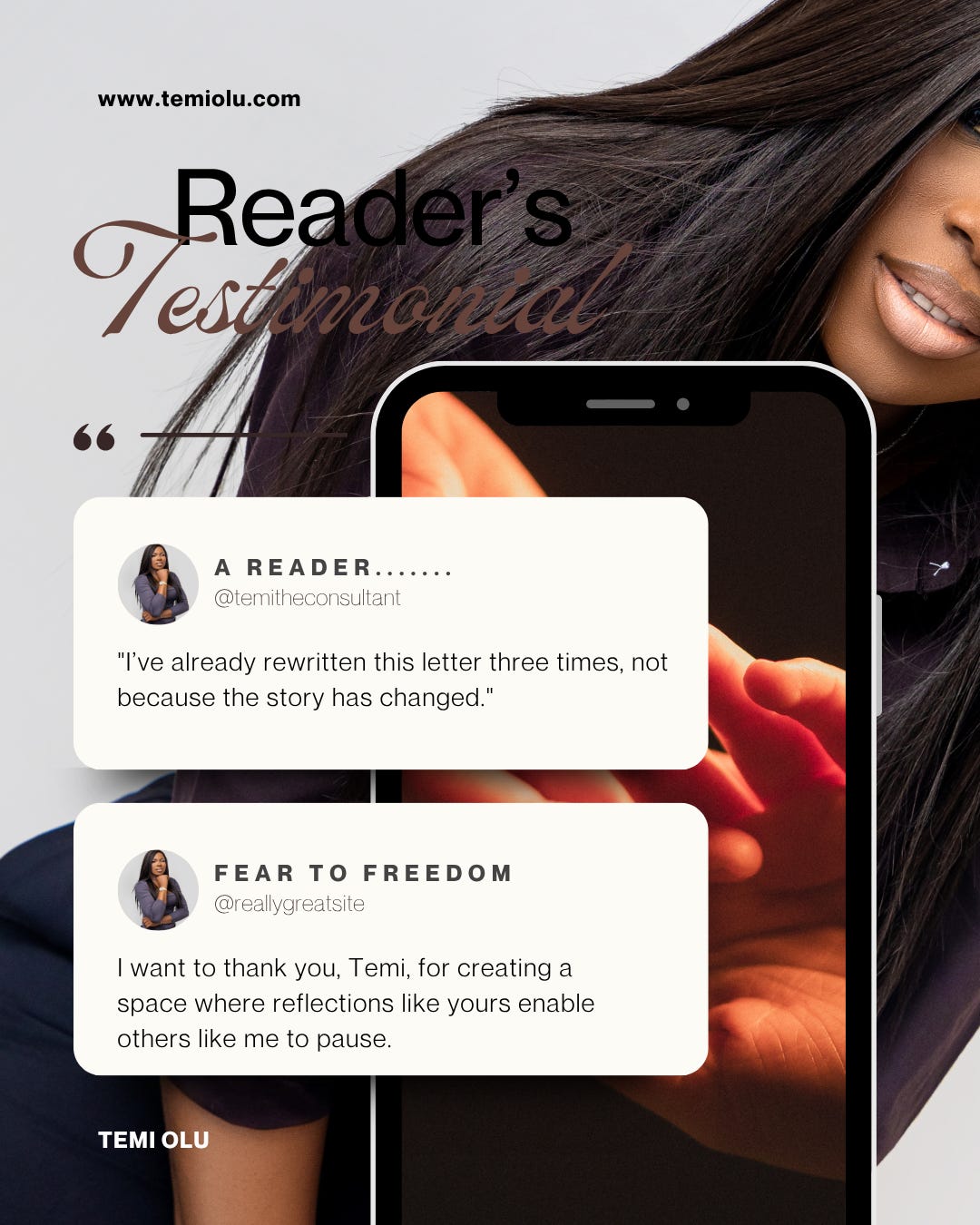
I’ve already rewritten this letter three times, not because the story has changed, but rather because it seems oddly vulnerable to acknowledge how much fear used to control my life. People frequently remark that I appear composed and even self-assured when they see me now because they didn’t see the extent to which silence and persistent fear have shaped my life.
For years, fear dictated my choices, which is nothing new to you either. I shied away from doing new things because I was afraid of failing. I avoided people because I was afraid of being rejected. I always selected what made everyone comfortable but myself because I was afraid of disappointing them.
Outside, my life seemed to be stable. I put out a lot of effort, kept up friendships, and took what I thought were safe routes. On the inside, though, I felt stuck in a life moulded more by caution than by bravery.
I sat by myself in my room after your workshop sessions last month and kept asking myself the exact question you asked us.
What would my life look like if fear stopped leading it?
I was uneasy about that question since the truth was straightforward: many of my life’s boundaries weren’t actually obstacles. I had constructed these walls to keep myself from feeling uncomfortable.
At that moment, I couldn’t stop thinking about all you had taught in our workshops about having courage and trusting God during uncertain times. The phrase stuck with me for some reason. Not because they provided a quick fix, but rather because they made a suggestion that I had not previously given much thought to: freedom frequently starts with tiny steps of trust.
I started small, prayed truthfully, and told God about my fears rather than acting as though they didn’t exist. I started making tiny decisions in a different way, speaking up in situations where I would typically remain silent, taking advantage of possibilities that were a little daunting, and permitting myself to think that failure wouldn’t ruin me.
Although fear still sometimes shows up, it’s no longer in charge of the result. Rather than asking “What if this goes wrong?” “What if God is leading me somewhere better than I imagined?” I started to question.
I eventually stopped centring my life solely on what other people thought of me, and now that I’m looking back, I see that trust rather than perfection was always the antithesis of fear. Have faith that God will lead me even if I don’t have all the answers. Even while fear no longer resides here, there are still times when it tries to return.
Even though you always stress that you are also a work in progress and that fear could sneak in and question your conviction, I want to thank you, Temi, for creating a space where reflections like yours enable others like me to pause, reflect, and take those small daring moves.
With gratitude,
A Reader Learning to Walk in Freedom