

The first time I met Maathai's mother, I was wearing yellow. I remember because she looked at me from head to toe, her eyes pausing on my gele as if it had personally offended her, and her remark was, “Bright colours suit bold women.”
She said it like a compliment, but the silence that followed made it feel more like a diagnosis. I laughed politely and said, “Thank you, ma.”
Now I understand what she meant: bold enough to believe you could belong here. Bold enough to walk into a house where you were never invited. Bold enough to love a man whose mother will never clap for you at your wedding.
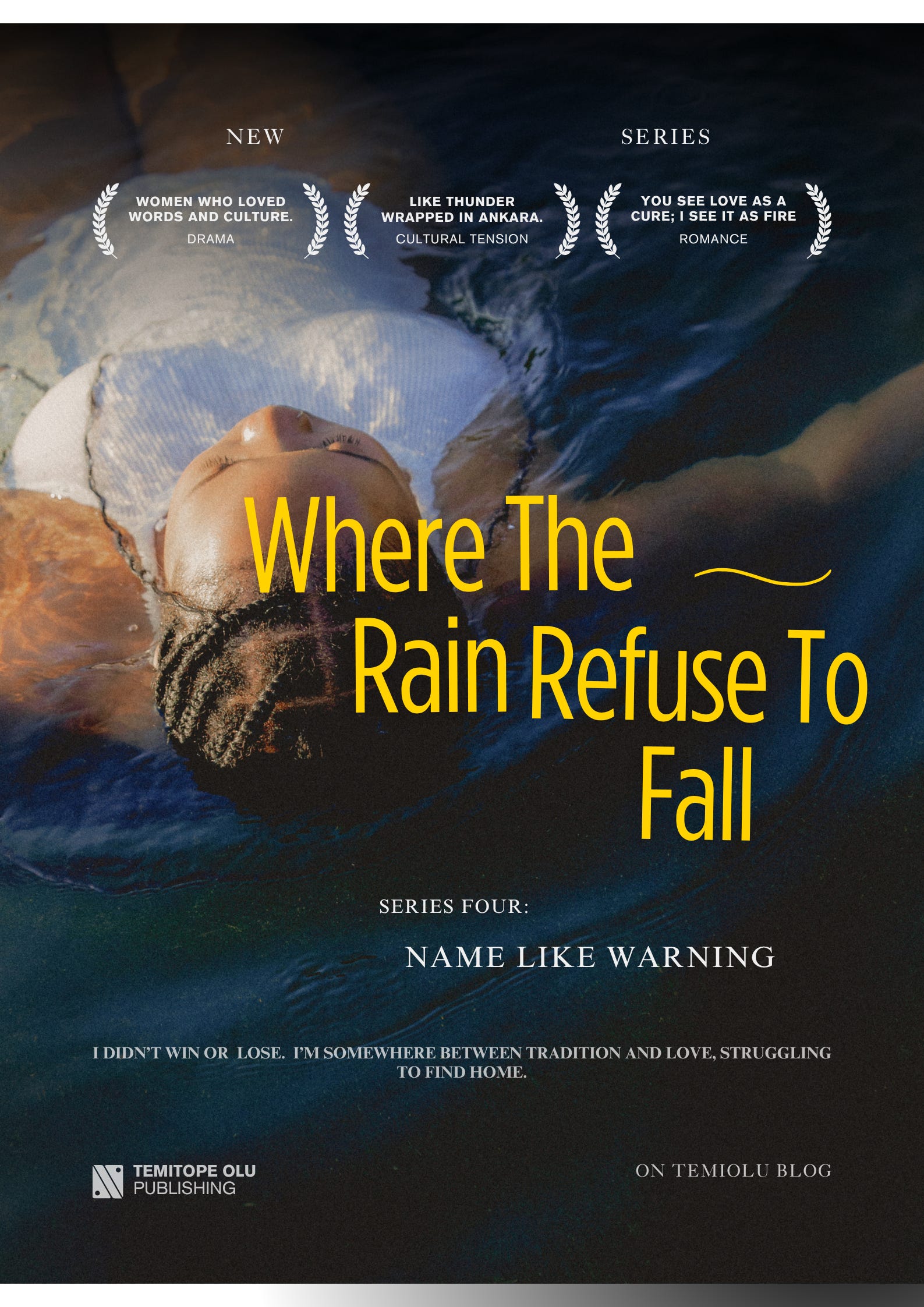
Her name is Zawadi, which means "noblewoman." But to me, it sounds like thunder wrapped in Ankara.
She’s regal, articulate, and brilliant, a retired literature professor with a voice like silk and a tongue sharp enough to cut glass.
I had imagined we would connect two women who loved words, culture and faith.
But we’re from different pages entirely. And today, I’m on her veranda again, not because I want to be, but because I need to know if there’s truly no way forward.
She opens the door. No smile.
“Abuto.”
“Good afternoon, ma.”
She nods stiffly and motions me in like someone letting a cat into the house when it’s raining, not out of love, just mild decency. I sit. She remains standing.
“You’re here to plead your case?” she asks.
“No, ma. I’m here to understand your heart.”
This makes her pause.
“My heart?”
“Yes.”
She walks to the armchair and sits with her back straight and her dignity dressed in silence. She takes a long breath.
“Do you know what it's like to watch your son abandon legacy?” she says.
I blink. “Is that what you think he’s doing?”
She folds her hands.
“My husband, Mzee, was nearly disowned for marrying me. He came from a line that believed tradition was law. But he loved me enough to stand against them. I thought we were starting something new. But then he died, and I was left with the burden of raising Maathai in a world that still spits on what doesn’t fit.”
I say nothing. Just listen.
“He’s all I have… You see love as a cure… I see it as fire… beautiful but consuming. It doesn’t erase culture. It doesn’t rewrite memory.”
“I’m not trying to erase anything, ma.
She leans forward. “You are Lou, Abuto.”
“You think I care about that?” I ask quietly. She smiles, bitterly.
“You don’t have to, but I do. Because I know history. My father was beaten during the riots in ’79. Beaten by a man who called himself your brother. My cousin lost a job because her name gave her away. And now you walk in here and expect me to forget what it cost to survive?”
“I’m not that history,” I whisper.
She stands again. “No. But you come from it.”
“I have come to understand, and I think I do now. But understand me, too, ma. I love your son not as a rebellion or weapon. Just as a woman who saw light in a man and wanted to walk beside it.”
She stares at me and for a second, I almost think she might cry.
She straightens her scarf.
“Then I suppose we’re both asking for the impossible.”
I nod and I leave.
In the car, I exhaled the breath I was holding. I didn't win, but I didn’t lose. I just… existed, bravely, in front of the storm.
Somewhere between tradition and love, I’m still trying to find home.
And maybe, just maybe, that’s what Maathai and I have to build from scratch.
Even if the rain still refuses to fall.